
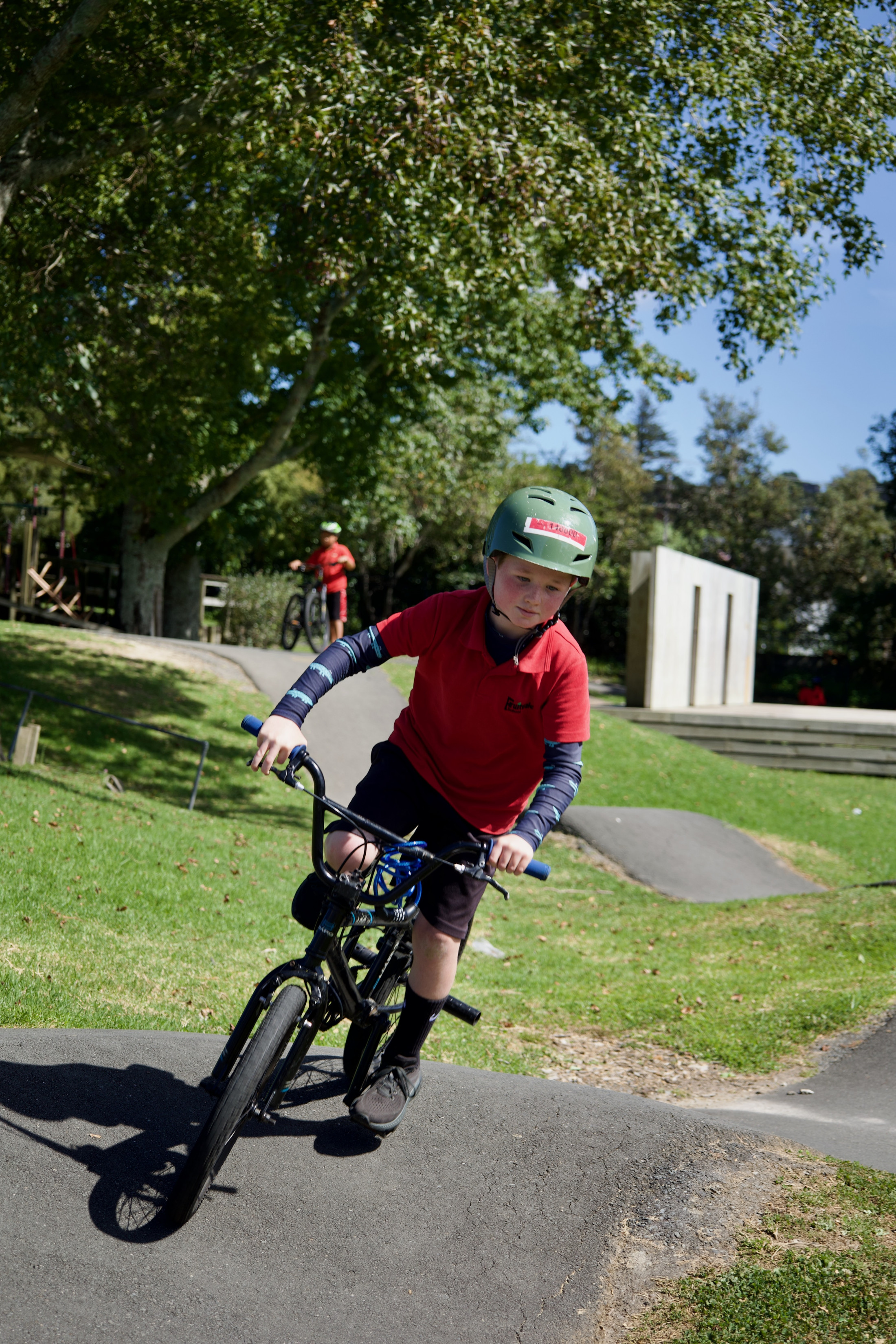
Bike Track
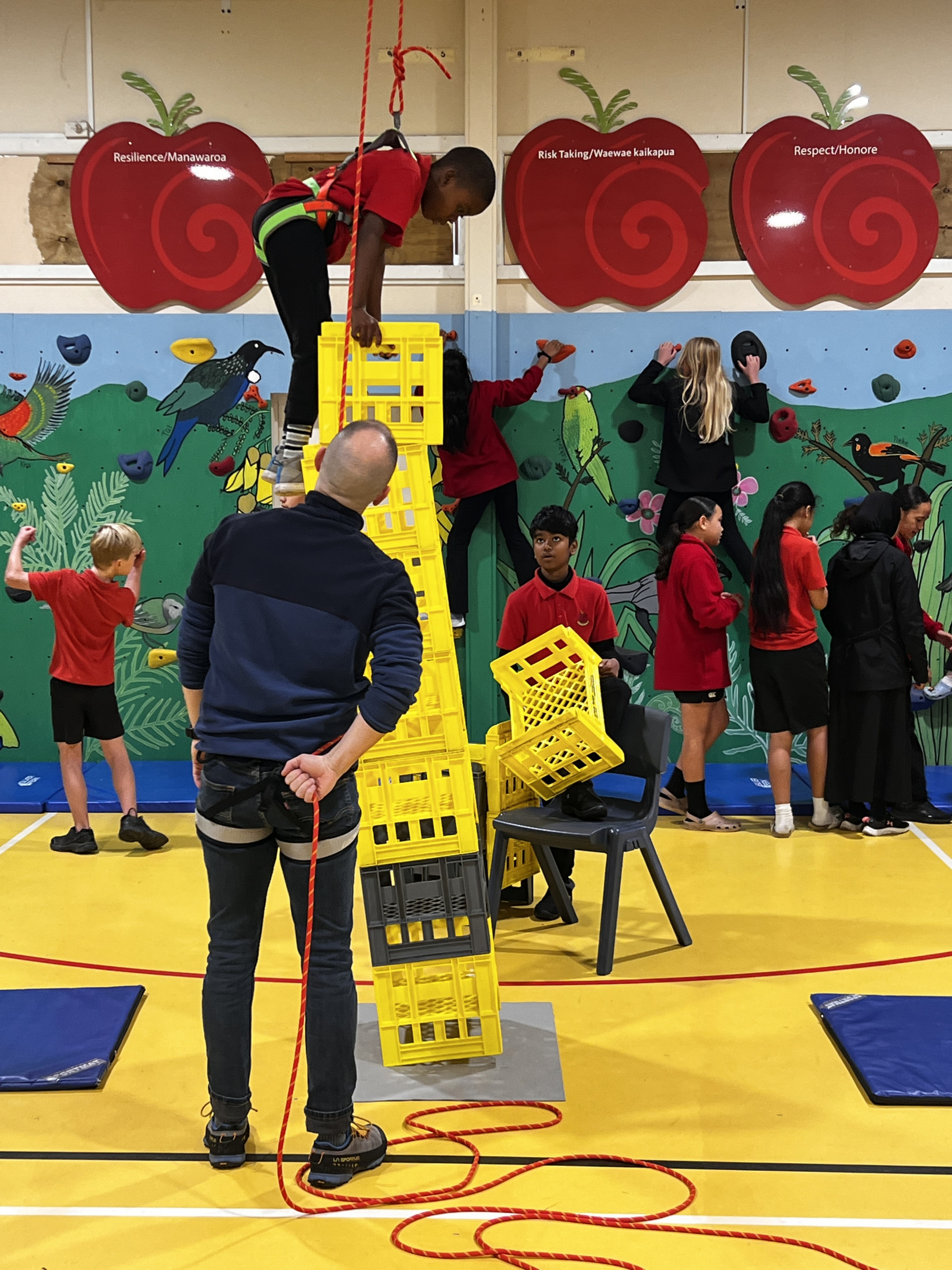
Wild Skills
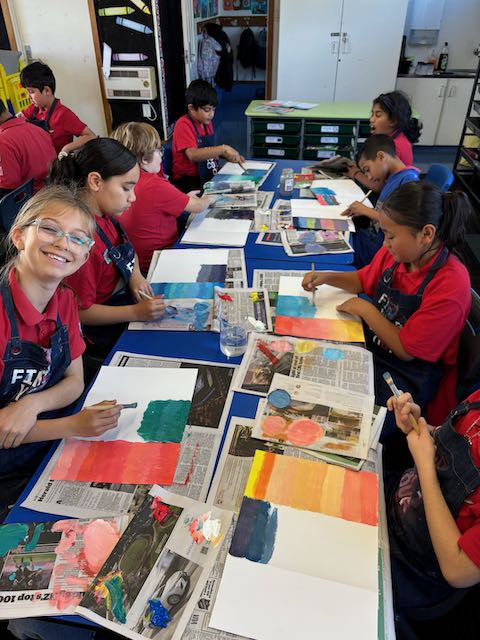
Culture & The Arts
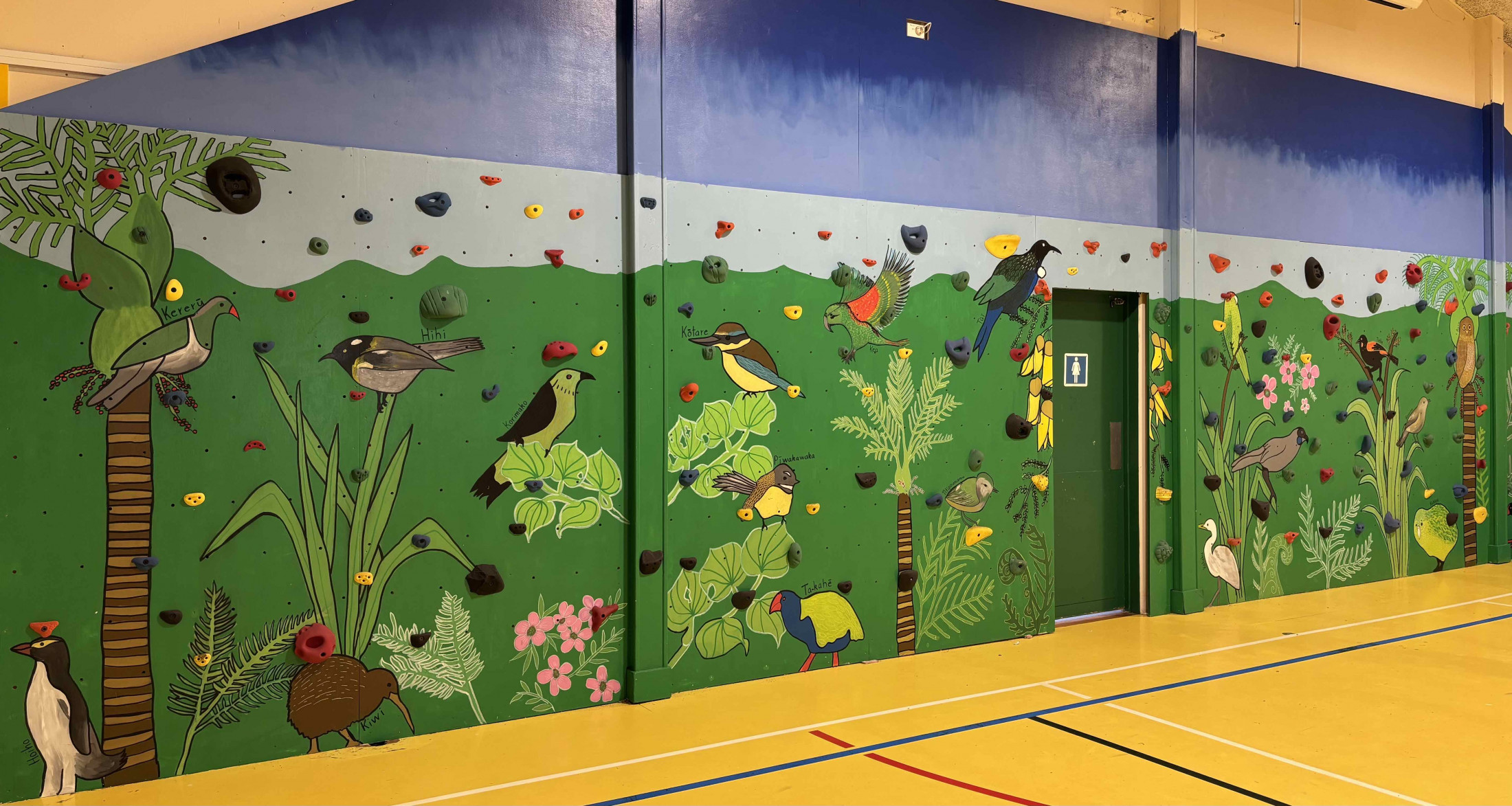
Murals at Fruitvale
Garden to Table
Breakfast Club
Regeneration
Fruitvale School is committed to not only a sustainable future but a Regenerational future. With that in mind we are involved with and have created school programmes throughout the year that emphasize positive solutions for aligning intentions and actions with respect to positive climate outcomes.
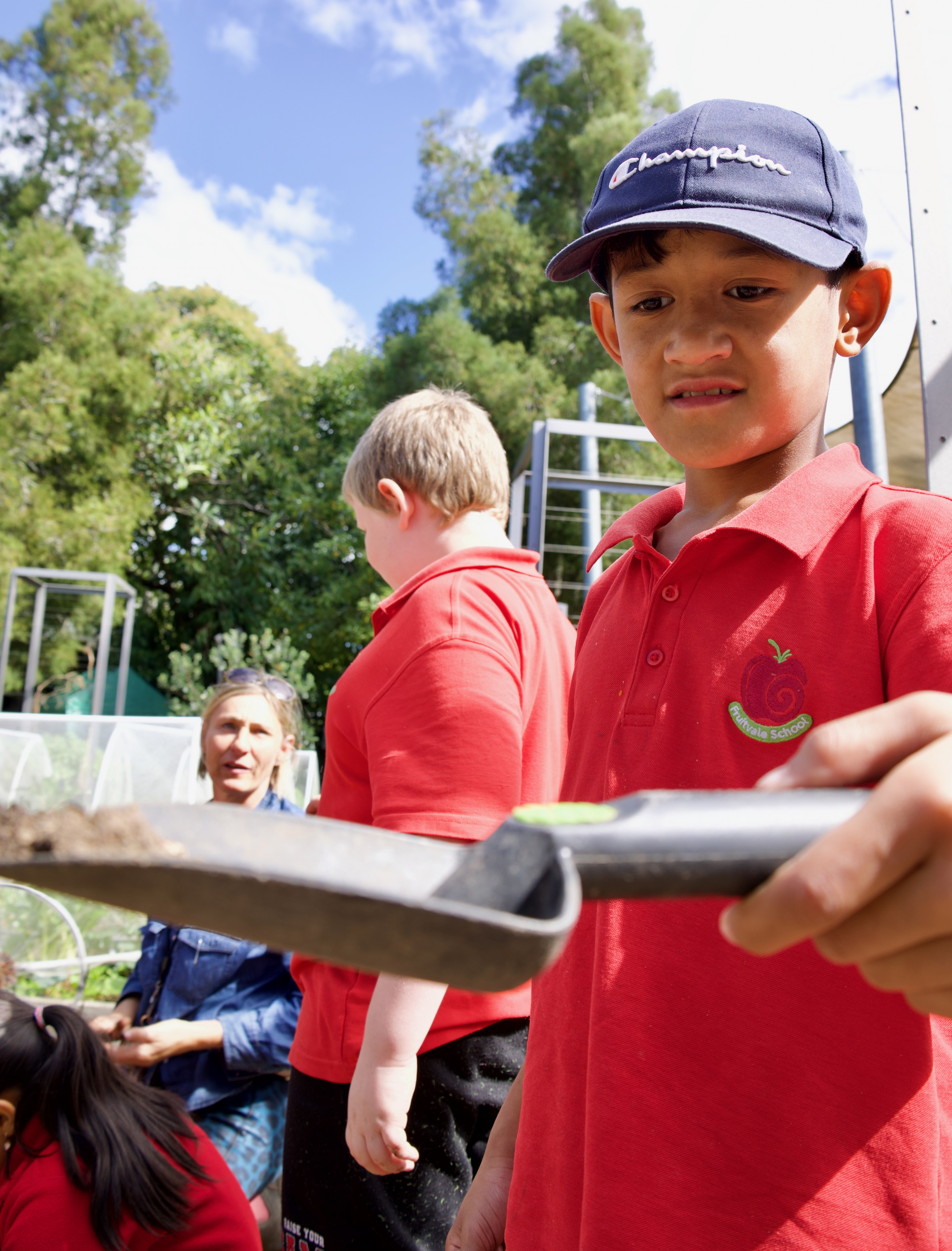
Garden to Table - We are a committed Garden to Table school - we are a model Garden to Table school. We employ both a garden specialist and a kitchen specialist to work alongside our normal programmes with 100 of our senior students. This gives the students an opportunity to experience and understand the connection between the earth - our soils- and the food we put on the family table. It is an excellent programme for developing the knowledge and love of gardening and the simple and nutritious methods and recipes that can quickly become habits of mind when choosing foods to eat.
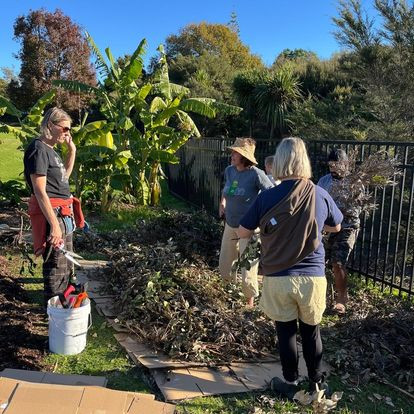
Regeneration - We have a 28Kw solar array on our newest building's roof that minimises our schools load on the grid. We are harvesting water for our gardens and retaining water off our roof spaces to slow the rate water enters our stream. We have a very complex water retention and filtering system incorporated into our new drive that means that the water entering our stream is clean. We have day-lighted a stream at the border of our school property to regrow local bush and protect stream life while reducing the possibility of flooding in our local area. This stream, and bush area is full of native trees is designed to attract native birds and be part of regenerated spaces for local wildlife to flourish. We collect and recycle plastics and our food waste goes into compost for our GTT gardens, and are mulching to retain water in our gardens and to lessen the use of chemicals for controlling weeds.
Technologies - We are in the process of developing a Makerspace/library that we are calling a Global Learning Area (GLA) to provide the opportunity for students to understand technologies from the very simple to the more complex so that they can create solutions in their futures to the problems they will need to solve.
Most of all we are basing the whole of what we do on our 5 values: Respect, Responsibility, Risk-taking, Resilience and Reflection. We have translated these values into te reo and have put them in context with powerful whakataukī. We are growing a tamariki whānau that care deeply about others, themselves and their world and have the skills and attitudes to make that world flourish.
Academic - We are a Visible Learning School. Visible Learnings Basic Messages are:
1. Know Thy Learner
2. Teaching through the eyes of the learner
These insights and much more are based on the research of John Hattie (2010, 2011, 2012). We work inside Hattie’s 8 Mindframes for teachers:
· I am an evaluator / activator
· I am a change agent
· I am a seeker of feedback
· I use dialogue more than monologue
· I enjoy challenge
· I have high expectations for all
· I welcome error
· I am passionate about and promote the language of learning.
We are in the process of understanding and operating these mindsets through a Te Ao Maori(Maori world lens) lens. This is exciting work as we understand and integrate the understandings of our two cultures for a more inclusive future. We reserve our mornings for Literacy and numeracy (These blended with our study contexts - most latterly science).
Our teachers are professionally trained to meet the learning needs of the variety of children in front of them. We are a learning community and the teaching and support staff take very seriously the education of your child. We encourage risk-taking as an important part of any real learning.
We inquire into what we are doing and how we can do better as a result of this inquiry.
Currently our Junior rooms are using, ‘Learning Through Play', methodologies and we are working to best understand and integrate early childhood theory and practices that provide a safe transition between home, ECE and primary school.
We are evidence driven and look to make a difference across the curriculum. All teachers are numeracy trained and work together to build classrooms that incorporate experiential techniques designed to encourage talking and so conceptual growth. Oral language is the basis of all learning particularly in reading and writing. Because many of our learners are speakers of other languages we strive to ensure they have excellent spoken English models. Children achieve well here. Having said that, we appreciate first languages are the best way to a second language, and encourage children and their whanau to speak in their first language.
Assessment:
We are a “Visible Learning” school - “Visible Learnings” basic messages are:
- Know thy Learner
- Teaching through the eyes of the learner
These insights and much more are based on the research of John Hattie (2010, 2011, 2012). We work inside Hattie’s 8 MindFrames for teachers:
· I am an evaluator / activator
· I am a change agent
· I am a seeker of feedback
· I use dialogue more than monologue
· I enjoy challenge
· I have high expectations for all
· I welcome error
· I am passionate about and promote the language of learning.
We are in the process of understanding and operating these mindsets through a Te Ao Māori world lens. This is exciting work as we understand and integrate the understandings of our two cultures for a more inclusive future.
We reserve our mornings for literacy and numeracy (these are blended with our study contexts - most latterly science). Our teachers are professionally trained to meet the learning needs of the variety of children in front of them.
We are a learning community and the teaching and support staff take very seriously the education of your child. We encourage risk-taking as an important part of any real learning. We inquire into what we are doing and how we can do better as a result of this inquiry.
Currently our Junior rooms are using, ‘Learning Through Play', methodologies and we are working to best understand and integrate early childhood theory and practices that provide a safe transition between home, ECE and primary school.
We are evidence driven and look to make a difference across the curriculum. All teachers are training in PRIME math and work together to build classrooms that incorporate experiential techniques designed to encourage talking and so conceptual growth. Oral language is the basis of all learning particularly in reading and writing.
Because many of our learners are speakers of other languages we strive to ensure they have excellent spoken English models. Children achieve well here, having said that, we appreciate first languages are the best way to a second language, and encourage children and their whanau to speak in their first language.
Sports:
Sporting prowess takes time and practice. Because we are committed to academic achievement students practice and are coached in their lunchtimes and after school. We believe it is absolutely necessary to have balanced schooling and to have all children engaged in fitness and sporting opportunities.
We are active in the local inter-school cluster and have tamariki entered into all sporting fixtures. Because we are a smaller school this means your child gets lots of opportunities to participate, to excel and to lead. We often are in the leading three schools in these competitions: rugby, soccer, netball, touch, tag, gymnastics, swimming, athletics, cross-country.
We encourage any parents that would like to help coach to approach us so that we can offer your children the best opportunities in as many sports as possible. Netball and Waterpolo (Flippaball at primary levels) especially require input from parents for these competitions to happen well.
We have a good size swimming pool (120,000L) that we are very proud of and that is used constantly over Terms 1 & 4 we teach swimming skills and water confidence as appropriate, and our pool is often available for community use over the summer break.
Cultural:
Our cultural life is underpinned and built daily on our five Values: Respect, Responsibility, Risk-taking, Resilience and Reflection.
We want all of our children to be able to express their own culture and be familiar with the dance and song of many cultures. We have kapa haka, and Pasifika cultural performance groups.
As we are able to, we offer alternative cultural dance opportunities. We believe it is absolutely necessary to balanced schooling, indeed for a balanced life to have all children engaged in dance and other cultural opportunities.
Every alternate year we create a whole school dramatic performance in term three. Often, at the end of a term, we will construct a “Celebration of Learning”, that the whole community is invited to attend. This celebration is a creative way of pulling all the different threads of our Inquiries together and can take whatever form is most appropriate to the topic being studied. In the past we have had ‘masterchef’ competitions, character parades, international food fairs as well as science fairs and multi-media performances. Every alternate year we have a Camp for the Year 5 & 6 students and on the other years a Marae visit and overnight stay.
Tuakana-teina:
We believe in living out our values: The school is organised physically in tuakana-teina pairs. An older class and its teacher is paired with a younger classroom and its teacher.
Tuakana-teina classes will often interact across the school day to reinforce or build confidence, cooperation and competence and nurture the relationships of the older children with their younger peers.
We have the occasional bully like all schools but this is dealt with quickly in our restorative justice style and our playgrounds generally are very safe. We are known for the very real care both our staff and our students show each other.
The Use of Technology:
It's not the tools but the way they are used that counts.
We are leaders in the use of the interactive technologies and where it is useful we will integrate computing with learning. We are ICT rich with 3D printing, Virtual Reality tools, online constructive applications (for children), laser cutters, Google classroom and Google suite.
We are developing our use and integration of 3D printing and robotics. We have twenty+ computers in each room and Interactive TV's across the school.
Our web presence is highly interactive and once your child is in the school will become a real resource for them here and at home. We continue to upgrade our plans for the further integration of technology within learning.
Inquiry:
Inquiry forms a large part of our practice from the Senior team and up from the students.
All teachers and the Senior Team are engaged in Inquiries of their practice which are based on rigorous assessments and designed to keep us evaluating our impact on our students. Our student inquiries are guided until students have a firm knowledge of the process and all the technologies and skills required to inquire well. We use Curriculum Mapping to guide the depth and assessment of each inquiry and through this seek to grow the skillset required to collaborate with others for great outcomes.
On a recent Assessment designed and conducted by Auckland University’s; Professor Peter O’Connor, we were able to determine through normed assessment that our kids were learning in very creative classroom environments. Peter himself in conversation
discussing the assessment stated... (Fruitvale’s) results were out of the box, compared to the other schools(50) you were a stanine above these. You should be shouting these results from the rooftops.” Of course we were very happy to hear this and as you probably know “Imagination…” is much more important than knowledge. Knowledge is limited. Imagination encircles the world” Einstein And “Creativity is intelligence having fun.”
All of our teachers are active inquirers. They are all working on inquiries aligned with the most difficult or interesting problems they encounter in their practice. They are all able to access coaching around their professional inquiries and they will often team up to present inquiries that solve common problems. Teacher inquiry is central to our professional development and very fully worked through each year with staff. The staff love the work they are involved with and the support they get to best understand and resolve the problem of the day.